

What Actually Makes a Destination Queer-Friendly?
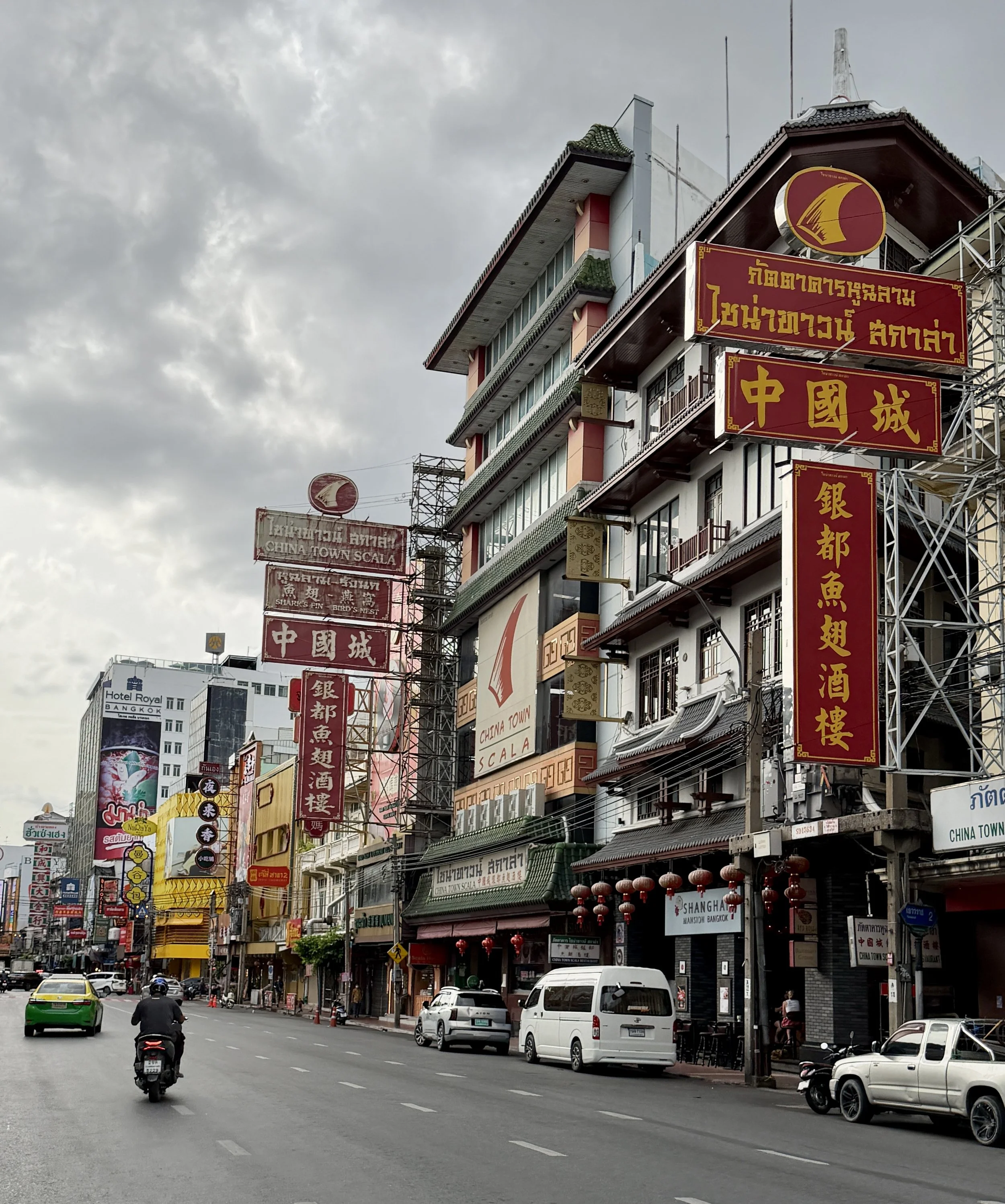
Yaowarat Road (Thanon Yaowarat) famous for its glowing neon Chinese signs, dense crowds, and world-renowned night street food scene
Every June, the lobby gets a rainbow flag. The hotel posts a Pride graphic. The tourism board runs an ad with two men holding hands on a beach.
And when I see this, I wonder - does this symbolize a deep, year-round commitment, or does this get taken down at midnight on July 1? Is it the tourism board that markets this destination as progressive or safe, or is this genuinely a place where queer locals can thrive?
I learned the difference in Puerto Vallarta. I love that city now. But on my first trip, I was expecting queer paradise: beaches, tacos, art and queers everywhere. Everyone had told me about it. When I got there, the queer part of town was mostly gay men’s spaces, and some bars were men-only. I love gay men’s spaces, and they matter. But I felt othered in a way I wasn’t used to, in a place that was supposed to be for me.
Why "LGBTQ-friendly" isn't enough
Queer travelers are a market destinations want. We travel more than almost anyone. 96% of LGBTQ+ adults take at least one leisure trip a year, and we outspend the average traveler by 23%. So the rainbow gets painted on a lot of places.
Some of that is real. Some of it is marketing. Often it's both at once.
The equality indexes help. Equaldex, the Spartacus Gay Travel Index and ILGA's Rainbow Map are good homework. But they measure laws. Laws tell you whether it's legal to be you somewhere. They can't tell you whether it will feel good.
So here's how I actually vet a destination.
DQ’s 5-part assessment
1. The Basics: what do the laws say, for all of us? Laws are where I start, not where I stop. And I read them for everyone. A country can have marriage equality and still not let a trans person change the gender on their ID.
2. The Locals: is there a queer community here when the tourists leave? I look for queer-owned businesses, local organizations and people who live there year-round. If queer life only shows up on Pride weekend, that's an event, not a community. (Psst. I also want your travel money to reach those people.)
3. The Daylight Test: can I find queer life outside a bar at 11pm? Nightlife is great. But if the only queer space is a club strip built for gay men, a lot of us are left out. I look for cafés, bookshops, history and people who'll show you their city in daylight.
4. The Check-In Test: how are you treated when you arrive? Two women ask for one bed. Someone gives their pronouns. What happens next tells me more than any flag. Is the staff trained, or just decorated?
5. Friendly to whom? Most "gay-friendly" content was built for one kind of queer traveler. I ask whether a place works for queer women, trans and nonbinary people and queer people of color too. That's the test Puerto Vallarta failed for me the first time. The answer is often "it depends," and that's exactly the nuance I plan around.
The test in action: Thailand
Thailand is a great example because it's doing a lot right, fast.
In Bangkok, I spent an afternoon on a walking tour with Shane (he/they) of The Lovers' Plan, a queer events and walking tour company. We started with the long history of queer life in Thailand, at Sri Maha Mariamman Temple on Silom Road. That Hindu temple is where Bangkok's 2022 Pride parade began, the city's first major Pride parade in nearly 16 years.
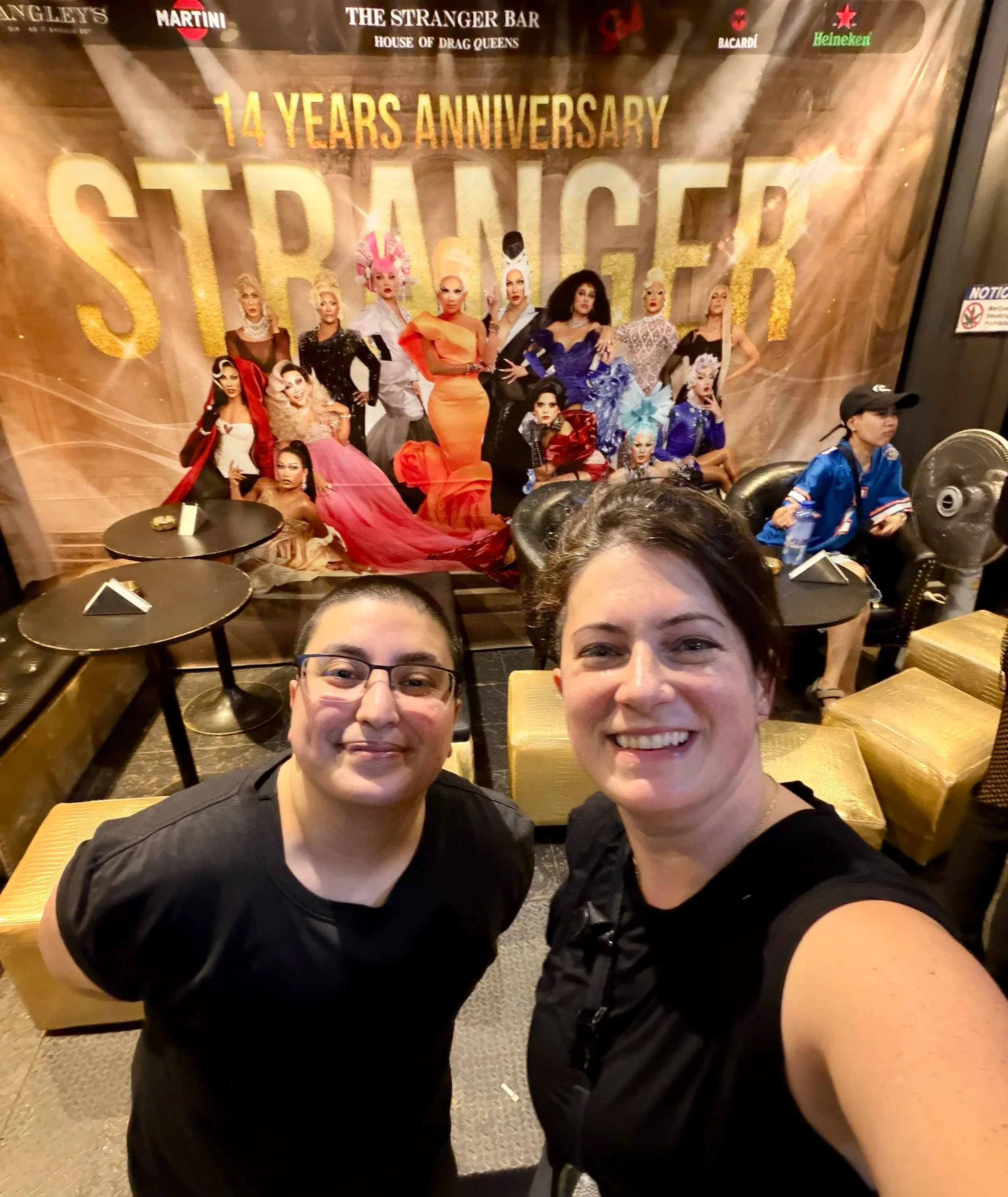
Grace & Shane in front of The Stranger Bar in Silom Soi 4. This is the first Thai Drag Bar owned by a Drag Queen! (and home of some excellent drag shows)
The Basics are strong here. In January 2025, Thailand became the first country in Southeast Asia to legalize same-sex marriage. On the first day, 1,754 couples registered. The tourism authority runs a whole platform for queer travelers, and Bangkok is bidding to host WorldPride 2030.
The Locals test passes too. Queer Thais are out and visible. The people I met in shops and restaurants seemed comfortable being exactly who they are.
But it's not a utopia. Dig in a little and the picture gets richer. Legal gender recognition for trans people is still under debate. The best-known queer Bangkok is the Silom nightlife strip. Shane built The Lovers' Plan because there weren't enough spaces for sapphic and trans community.
Public opinion tells the same story. In Ipsos's 2026 survey of 26 countries, Thailand came first for supporting people being openly LGBT, at 70%. But only 42% of Thais supported same-sex couples holding hands or kissing in public. You're welcome to be out; people are less sure about the hand-holding. This is also partially due to the cultural distaste for PDA, regardless of gender or sexuality.
My take: Bangkok is still one of the best places to visit if you're queer, trans or nonbinary. I'd just plan the details, and look beyond Silom's bars.
Rainbow flags aren't bad. They're just not proof.
I'm not against the flag in the lobby. Visibility matters, and sometimes it's the first sign someone is trying to be welcoming.
But a flag is where my questions start.
No place in the world is perfectly safe for queer travelers. I don't want my clients to find out the hard way. I want them to arrive knowing what to expect.
And when I plan your trip, there's no awkward "one bed or two?" moment at check-in. That's already taken care of. :)
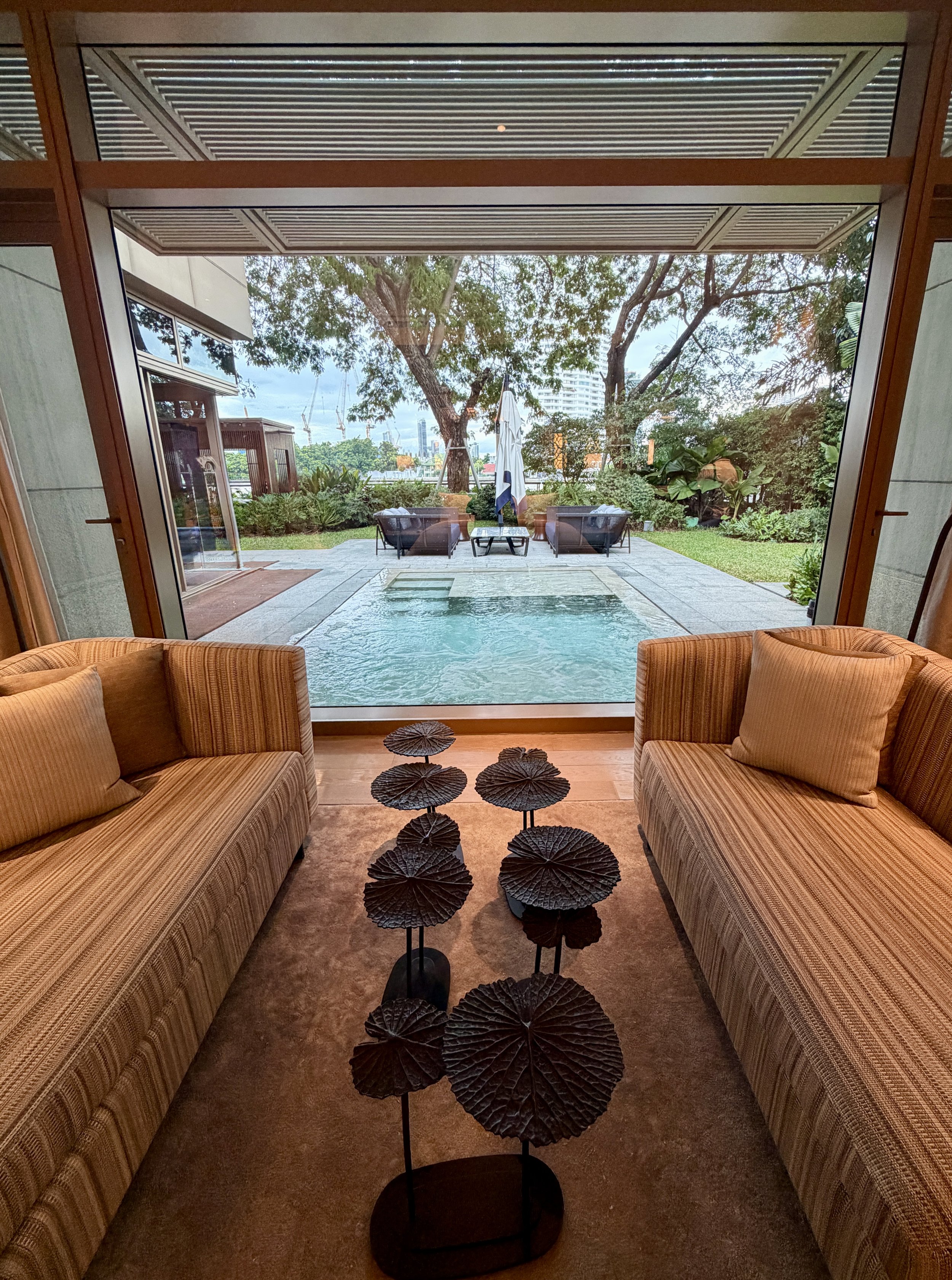
From a site visit conducted at Capella, a gorgeous Bangkok Hotel situated on the Chao Phraya River. Take a river boat, tuk tuk, hired car, or public transportation to and from this property! It’s the kind of property where I confirm bed setup and staff training before you ever arrive.
Want a destination vetted for you?
The full framework, with the questions I ask on every inspection, is in the free DQ Travel Playbook. Or if you're already dreaming about a trip, Book a Vision Call and I'll run the test for you.